Monday, March 14, 2016

What Does Climate Change have to do with Pollution? Nothing


china-pollution-jalopnikdotcom.jpg
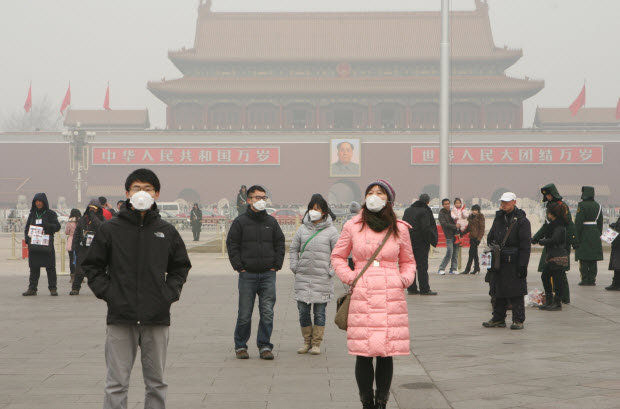
With its urban population choking and 60 percent of its groundwater polluted, China is taking significant steps to clean up its act.(Jalopnik.com)


The picture above accompanied the New Jersey Star-Ledger’s editorial What's the GOP excuse for climate inaction now?, which employed the smear tactic “science denier” and which was the subject of my post of 11/7/15. That picture was meant to conflate the non-problem carbon dioxide emission-generated climate change with a real problem, actual pollution. The editorial addressed China’s announcement that it will institute a cap-and-trade system to reduce climate affecting emissions of carbon dioxide and other greenhouse gases. Whatever “significant steps” China is taking to clean up its actual pollution was not addressed in the editorial.


I addressed this bait-and switch tactic in one of my comments on the editorial:


First, about that picture from China above the editorial: It has nothing to do with climate change. The picture and accompanying caption depicts actual pollution, which is caused by improper development and burning of fossil fuels, not fossil fuels themselves. That is to say, China lacks the advanced pollution control technology like that adopted by the West. America has made great progress cleaning up its air and waters even as its fossil fuel use and thus its economy has grown stupendously because we recognized long ago that rational anti-pollution laws and effective anti-pollution technology must go hand in hand with industrial progress. China is just coming to that realization.


Cap & trade, as it pertains to CO2 and “the fight against climate change,” may be politically and strategically expedient for China. But it will do nothing for China’s pollution problem. Carbon dioxide is a harmless gas, vital to life, and is not the cause of the smog shown in the photograph. The debate over climate change and what, if anything, government should do about it has nothing to do with pollution.


Related Reading:


A Humanist Approach to Environmental Issues—Alex Epstein

Saturday, March 12, 2016

The Ridiculous Classification of Carbon Dioxide as a ‘Pollutant’

One of the most absurd policies ever enacted by any government is the U.S. government’s categorization of carbon dioxide as a pollutant. Kindergarten science tells you that co2 is an odorless, colorless, harmless gas that is vital to the cycle of life on Earth.


Yet, people fall for the “pollutant” idea. One such person penned a letter to the New Jersey Star-Ledger. In Defining carbon dioxide as a pollutant, the writer makes the case that everything has limits, lest it become harmful. But should every element on Earth be labeled a pollutant? If so, the term is meaningless. The writer seems to grasp this, so he attacks columnist Paul Mulshine’s criteria of an air pollutant as something that is a "direct threat to the lungs"—an objective criteria that excludes CO2 as a pollutant.


The letter writer's counter:


Currently 75 percent of the American public feel that losing our shorelines, flooding our cities, increasing fires and drought are threats to them. These people are saying carbon dioxide is a pollutant.


Really? How many of these people would give up the reliable, economical energy that their clean water, lighting, transportation, clean, controlled indoor climate, and the myriad machine-made products and services that their lives depend upon? Given a choice, what would they consider the biggest threat, energy deprivation or being exposed to the ever-present natural climate dangers that men have always had to deal with? The “public” can say what it wants, but saying “carbon dioxide is a pollutant” doesn’t make it so, any more than the once popularly accepted “fact” of a flat Earth made that so. Neither does the parade of perpetually wrong, increasingly hysterical predictions of a climate cataclysm.


I left these comments:


So the term “pollutant” is to be redefined away from objective, observation-based facts because public opinion polls say that ever-present natural environmental hazards like floods, fires and droughts are a threat to human beings? Why not define water as a pollutant? Almost anything in sufficient quantities is harmful. To define something as harmless as CO2 as a pollutant is to obliterate any rational definition of the concept “pollutant.”


But there is a hidden political agenda behind the CO2-as-pollutant movement. The effect of defining carbon dioxide as a pollutant is to give totalitarian powers to government officials. Human life and flourishing—from every breath we take, which contains 100 times as much carbon dioxide than what we inhale, to fire, which is so integral to human life—requires the production of carbon dioxide. If carbon dioxide is a pollutant, then every human is a polluter, simply for living. Maybe we need population controls, such as a one-child policy, with forced abortions and sterilizations; fines for having more than one kid; forcible removal of “excess” children for adoption by childless couples; the demonization of girls.


Hyperbole? It’s already been done in China. Or maybe CO2-as-pollutant is only a means to get total government control of industry. What better way to expand government controls than to get control of energy—the industry that powers all other industries? Given the indispensable value of CO2 to life, the logic of carbon controls must necessarily mean totalitarian controls on human life, one way or the other.


Climate change is window dressing. If limiting carbon dioxide were the real goal, environmentally conscious people would be beating the drum for a crash program to advance nuclear power and, wherever feasible, hydroelectric power—neither of which emits CO2. They want neither. The real motive of the carbon-limitation gang is an anti-development, anti-industrial agenda. The opposition to fossil fuels, nuclear, and hydroelectric is a means to this inhumane agenda, because industrial society requires reliable, economical, industrial-scale energy to thrive. Nuclear and hydro have effectively been stopped. Only fossil fuels stand in the way of the anti-industrialists. Hence, defining CO2 as a pollutant.


Related reading:


Population Growth, Longevity, Prosperity, and CO2—Joe Bastardi

Thursday, March 10, 2016

Dividing Parents Over Charters and Traditional Government Schools

Newark, New Jersey—the state’s largest city—has a burgeoning charter school sector, and the schools generally do a better job than the traditional government schools. At least 25% of Newark students attend charter schools, five times 2008, and the number is likely headed to 40% within three years. “It seems inevitable,” observes Tom Moran for the New Jersey Star-Ledger, “that charters will eventually educate the majority of Newark kids.” As a result, many more charter applications ih the state are pending as demand continues to outstrip available charter openings.


But, despite parental demand and superior quality, charter schools continue to face opposition from the education establishment in Newark. Unfortunately, Mayor Ras Baraka is on the reactionary side.


In Baraka decries latest charter school spat as 'organized campaign' to divide parents, NJ Advance Media’s Dan Ivers reports for NJ.com:


Recent controversy over a letter to the state Department of Education has Mayor Ras Baraka decrying what he is calling an organized campaign to divide public and charter school parents in the city.


The Dec. 17 letter to Education Commissioner David Hespe urges the state to reject applications [to] expand enrollment by charter networks including KIPP (TEAM Academy), Uncommon Schools (North Star Academy) and the Robert Treat Academy. He argues that their growth would unfairly siphon state aid from traditional public schools already struggling with a significant lack of resources.


As you can see, the "division" Baraka sees (or imagines) is over the allocation of tax money. This kind of conflict is inherent is any scheme that throws everyone's money into one big pot: everone has no choice but to fight over his "fair share."

I left these comments:


Baraka’s “reasoning”—rationalization, actually—is a classic defense of the entrenched educational establishment against entrepreneurial progress.


In fact, we are, by our very nature, divided—into individuals, each with our own minds, values, opinions, and rights. Where we can unite is on ideas. One idea that we should agree on is the equal rights of parents to individually act on their own judgement in pursuit of a good education for their own children. That includes parental school choice.


Charter schools are funded by taxpayers. When a parent chooses a charter for her child, money earmarked for her traditional assigned government school follows her child to the charter school. Why shouldn’t it be that way? The entrenched establishment shouldn’t have a lock on taxpayer education funds any more than a business should have a lock on consumer dollars should a customer choose the spend her money elsewhere. Education tax dollars belong first and foremost to the people who earned the money in the first place; the taxpayers. It’s only fair that a taxpaying parent who pulls her child from the traditional government school in favor of a charter or other educational options should expect her child’s portion of the education tax dollars to follow. As long as we have tax-funded K-12 education, that’s exactly how tax dollars should be divided up—proportionally per child according to the value judgments of individual parents.


The reason why traditional public schools are “struggling with a significant lack of resources” is because parents are fleeing these failing schools in droves; failing, that is, in the judgment of the fleeing parents. The reason charter school operators continue to expand is because their schools are doing a good job in the judgement of more and more parents. For that reason, demand for charters continues to exceed supply in Newark.


Charters don’t give us anything close to a fully free education market, or even universal school choice. But to the extent charters give parents choices, they do offer some degree of market freedom. The growth of charters shouldn’t be “managed”—i.e., limited—by central planners. The growth of charters should be guided by the market; i.e., the cumulative voluntary choices of individual parents. The idea that charters impair “the ability of NPS to provide all students with a high quality, thorough and efficient education” is a hollow charge. The growth of charters proves that high quality education is exactly what NPS aren’t doing. In the name of collectivist utopianism—not “dividing” parents—Baraka proposes to stand in the NPS schoolhouse door, blocking children from escaping from schools their own parents judge to be failing their kids. The “organized campaign” by charter advocates looks to me as a defense of individual rights.


Related reading:


On Neo-George Wallaces Standing in the Schoolhouse Door, Keeping Children IN, rather than OUT

Tuesday, March 8, 2016

This ‘Women’s History Month,’ Distinguish Between Just and Unjust Equality

March is “Women’s History Month.” This is the first I’ve heard of that. Anyway, Laurel Brennan, secretary-treasurer of the New Jersey State AFL-CIO, penned a guest column for the New Jersey Star-Ledger titled  Women’s History: N.J. women continue to lead charge for equality.


Brennan, however, blurs the distinction between just and unjust equality. And the difference is black and white. Here are some excerpts from the article:


During the month of March, we celebrate Women's History by honoring the heroic deeds of the many women who have made life better for families through acts of selflessness.


We remember such pioneers as Charlotte Forten, a Philadelphia teacher who was among the first to volunteer to educate newly freed slaves in the South; Mary Harris "Mother" Jones, who fearlessly fought for workers' rights during the early 1900s; and Alice Paul, a New Jersey resident who was the strategist in the campaign for women's right to vote.


As is evident from these examples, the struggle for women's equality and economic justice often has been led by trailblazers in the labor movement. As the beneficiaries of their actions, we pay homage to our union and non-union sisters alike.


This year, gender pay equity, ensuring that all workers earn a living wage and organizing workers against vicious right-wing attacks are of particular concern.


Women's History Month fulfills an important role in highlighting how far we've come over the past two centuries.


But it also reminds us that our journey won't be finished until women receive equal pay for equal work, the minimum wage is a living wage and attacks on labor unions are overcome.


Brennan mixes together economic equality with political equality. But the first is unjust. The second is just. That is the black and the white.


I left these comments, edited for clarity:


Equating today’s women’s equality movement with the women’s suffrage movement is like equating an armed thug with his victims’ defenders.


Rights are guarantees to freedom of action that does not impose unchosen burdens on others, not a claim to economic benefits that others must be forced to provide. Women’s suffrage was about removing government-enforced impediments to a woman voting, which poses no threat to men’s right to vote. So-called gender pay equity and minimum or living wage laws, and laws granting unions the power to force themselves on unwilling workers and employers, are impositions of unchosen burdens. The first removes government aggression against individuals; the second imposes aggression. The first protects rights; the second violates rights.


Take so-called “equal pay for equal work.” Such laws violate the rights of employers and employees to negotiate voluntary compensation agreements by forcing employers to pay certain employees more than they mutually agreed upon.


So, isn’t “equal pay for equal work” fair. Taken abstractly, yes. But not if imposed by government force—not even if the government official can somehow objectively determine that the work in question is being performed equally, which he can’t.


Equality of rights before the law—equality of freedom of action—is the only kind of equality consistent with justice and reality. Any other kind of equality is an injustice and, in fact, a myth. There is no such thing as “equal work.” As anybody who has ever worked among other people can see, two people in the same job can be vastly different in terms of productiveness, reliability, and other factors, thus deserving of differing pay levels. But two people theoretically equal in all respects can also be different in terms of personal goals. My daughter, a working mom, knows she could command a higher salary, but she instead negotiated for more time to work from home rather than push for higher pay. The job flexibility is more important to her while her kids are young than a bigger paycheck.


Yet, gender pay equity crusaders discount this natural human diversity. They treat women like homogenous, mindless robots. They do not care about actual human beings. They only care about statistical averages, and the chance to give gold-diggers a shot at a lawsuit shakedown of employers. The “gender pay equity” movement is a boon to incompetents who don’t want to take responsibility for their own lives, and who see the chance of getting something they haven’t earned. The movement is also hurtful to women who voluntarily agreed to accept jobs at a certain pay level for reasons of their own.


The gender pay equity movement is an insult to the women’s suffrage movement. The same goes for minimum or living wage laws, laws that empower coercive unionization, and any other so-called “economic justice” laws that seek to equalize economic outcomes. Such laws begin with aggressive (aka initiatory) force—i.e., the violation of someone’s rights—and are thus immoral. There is no right to any particular level of compensation, and no right to force other human beings to pay you more than they are willing to pay. There is only the right to pursue the best pay agreement through voluntary agreement to mutual advantage with employers. Women’s suffrage fighters sought equal rights for women.  Today’s women’s equality fighters seek special unearned economic privileges for women secured at the point of a legalized gun, with the government as their hired gun. The two movements are moral opposites.


----------------------------------------------


Political equality and economic equality are opposites. The first leads to freedom. The second leads to tyranny. It’s either/or.


Related Reading:


Taking vs. Earning a "Livable Wage"
Sunday, March 6, 2016

The Left's Double Standard on Women

After taking a slap at Donald Trump for derogatory comments he made last August about Fox News’ Megyn Kelly, the Star-Ledger called Trump the “misogynist” the Best GOP candidate for women. Why? The Star-Ledger said:


But his verbal dysentery is not more repugnant than what the other candidates practice in their day jobs; or how they plan to govern women if that electoral majority helps send them to the White House.


What Trump said is not as bad as declaring that abortions must be prohibited even if the mother must die, as Scott Walker did. The Wisconsin governor, a college dropout who has medical expertise to know that there are always "alternatives" in such cases, has also vetoed equal pay, which also tells you about his contempt for women.


What Trump said is not as bad as gutting Planned Parenthood, as Jeb Bush did in Florida, where he took federal money intended for health care and put it into"crisis pregnancy centers," which bombard women with prayer, shame, and assorted quackery.


What Trump said is not as bad as eliminating funding for prenatal care and cancer screenings, then lying about how it was for budgetary reasons, and then gloating about how the cut was really about being pro-life, as Chris Christie has crowed on the campaign trail.


What Trump said is not as bad as Marco Rubio's zero-exceptions abortion orthodoxy – which only one in six GOP voters agree with, by the way, along with zero in six rape victims, probably. You have to be pretty unhinged for Ted Cruz and Mike Huckabee to think, "We thought we ran a strict Uterine Control HQ, but we'll step aside for this guy."


I left these comments:


The double standard is glaring.


Apparently, the Star-Ledger believes that women should be free to control the reproductive functions of their bodies, but not free to make spending decisions about their own money or employment compensation decisions with their employers. This contradiction—I would call it hypocrisy—undercuts the Star-Ledger’s alleged “concern for women.”


I agree that abortion should be legal. But the government should not be forcing pay scales on employers and employees (so-called “equal pay for equal work”). Nor should government be forcing people to fund, through their taxes, Planned Parenthood or other “women’s health” schemes. People have as much right to decide for themselves whether to fund Planned Parenthood, how much to agree to work for, and how much to pay their employees as women have to decide whether to abort or not.


You cannot claim to be a supporter of women’s rights if you only support rights selectively. The Star-Ledger is no better than the GOP’s anti-legal abortionists. They’re the pot calling the kettle black.


Related Reading:


Defending Reproductive Rights Depends Upon Upholding All Rights

Friday, March 4, 2016

The Left Will Hate Trump's Health Reform Plan

The Donald Trump campaign just released its HEALTHCARE REFORM TO MAKE AMERICA GREAT AGAIN. Trump’s reforms completely repeal ObamaCare, and move healthcare toward a freer market.


Trump correctly observes that “it is not enough to simply repeal ObamaCare. He offers several reforms that could have and should have been done instead of ObamaCare. But he acknowledges that more reforms will be necessary.


TPM Daybreaker posted an article, Donald Trump Releases Health Care Plan To Replace Obamacare. I left these comments:


At first glance, the Trump plan has two very good reforms that.


First, it solves the main cause of the “problem of pre-existing conditions”—tax policy that rigs the market in favor of employer-based health insurance—by equalizing tax structure for business and individuals, thus opening up a vibrant individual health insurance market that will lead to health insurance being as portable as auto, life, and homeowners insurance. And it will attack the high cost of insurance by knocking down inter-state trade barriers to true, national competition among insurers (a power that the Commerce Clause of the Constitution gives to Congress). Both problems are the result of prior government market interventions, and which ObamaCare disingenuously sought to “fix” by piling on more government controls, rather than repealing the prior controls.


The Left will hate this program, because it leads to less government control and more individual self-reliance. The only kind of “plan” the Left will accept is one that empowers government masterminds and forbids individuals from planning for their own healthcare. If less government control and more individual self-reliance is what Trump means by “make America great again,” it’s a good sign.


----------------------------------------------


It’s not all good. For example, on drugs, Trump calls for lifting restrictions on importation of drugs approved in other countries. On the face of it, that sounds good. But will foreign price controls also be imported? Then Trump says, “Though the pharmaceutical industry is in the private sector, drug companies provide a public service.” The same can be said of any company open to the public. This very statist viewpoint could pave the way for even much more control of drug companies, making them more  like electric utility companies. In the background always lurks Trump’s authoritarian “instinct.”


All in all—and again, at first glance—Trump’s reforms begin to redirect America toward more self-reliance and less control government dependence. Will the reforms get political traction? After all, Republicans have been advocating most of these free market reforms for quite a while, but to little avail.


A lot will depend on how it is marketed to voters. It must be marketed properly to succeed. I suggest Republicans simply lay out the basic choice America faces at this juncture in history. The regulatory welfare state has expanded relentlessly since 2001, so that we are now somewhere in the vicinity of a turning point. America has come to the point where the basic choice Americans face is, a nation of self-reliance or a nation of dependence.


Related Reading:


No Free Market Health Reform Will "Work"—by Socialist Standards

Wednesday, March 2, 2016

The Unfair Burden of ‘Public Parks’ and the ‘Public Good’

A letter published in the New Jersey Star-Ledger by Sam Pesin, president of The Friends of Liberty State park, blasted Governor Chris Christie for his plans regarding Liberty State Park. In Christie's plans will destroy Liberty State Park, Pesin fumed:


The Star-Ledger's July 6 editorial clearly described the danger that the "hallowed ground" of Liberty State Park is in due to the coming large scale privatization plans of Gov. Chris Christie.


LSP is N.J.'s crown jewel park overlooking the Statue of Liberty and Ellis Island and it was our 1976 bicentennial gift to the nation. It provides open space, inspiring vistas, lawns and walking paths for its annual 5 ½ million visitors to enjoy.


The governor's goal of LSP paying for itself is sickening. Parks serve the public good, and are therefore funded by taxes.


I left the following comment, edited for clarity:


“Parks serve the public good, and are therefore funded by taxes.”


The “public good” is the tool of special interests seeking to impose their values on everyone else. In this case, Pesin wants to preserve the ability of 5.5 million visitors to freeload off of taxpayers throughout the state, regardless of whether these taxpayers—whom Pesin and his ilk ignore but are also part of the public—wish to subsidize these visitors. Pesin, like all public good peddlers, really means “I am the public, and what I believe is the public’s good goes.”


5.5 million freeloading visitors a year does not constitute the whole public. If numbers are the criteria, Disney World is much more in the public good. It gets nearly 50 million visitors a year, 9  times Liberty State Park. And Disney World is fully private and fully pays for itself—and is profitable to boot. None of Disney’s visitors freeloads off of taxpayers. Every visitor pays his own way. Liberty State Park visitors should also.

There is no moral justification for tax-funded parks. If Liberty State Park can’t survive on self-supporting visitor fees and other voluntary means of raising revenues, it should depend on voluntary contributions to fill in the gaps rather than picking taxpayers’ pockets. If it still can’t survive, it takes steps to attract more visitors or closes. No one has the right to parks paid for by someone else. Kudos to Governor Christie for proposing to take this monkey off of the taxpayers’ backs.